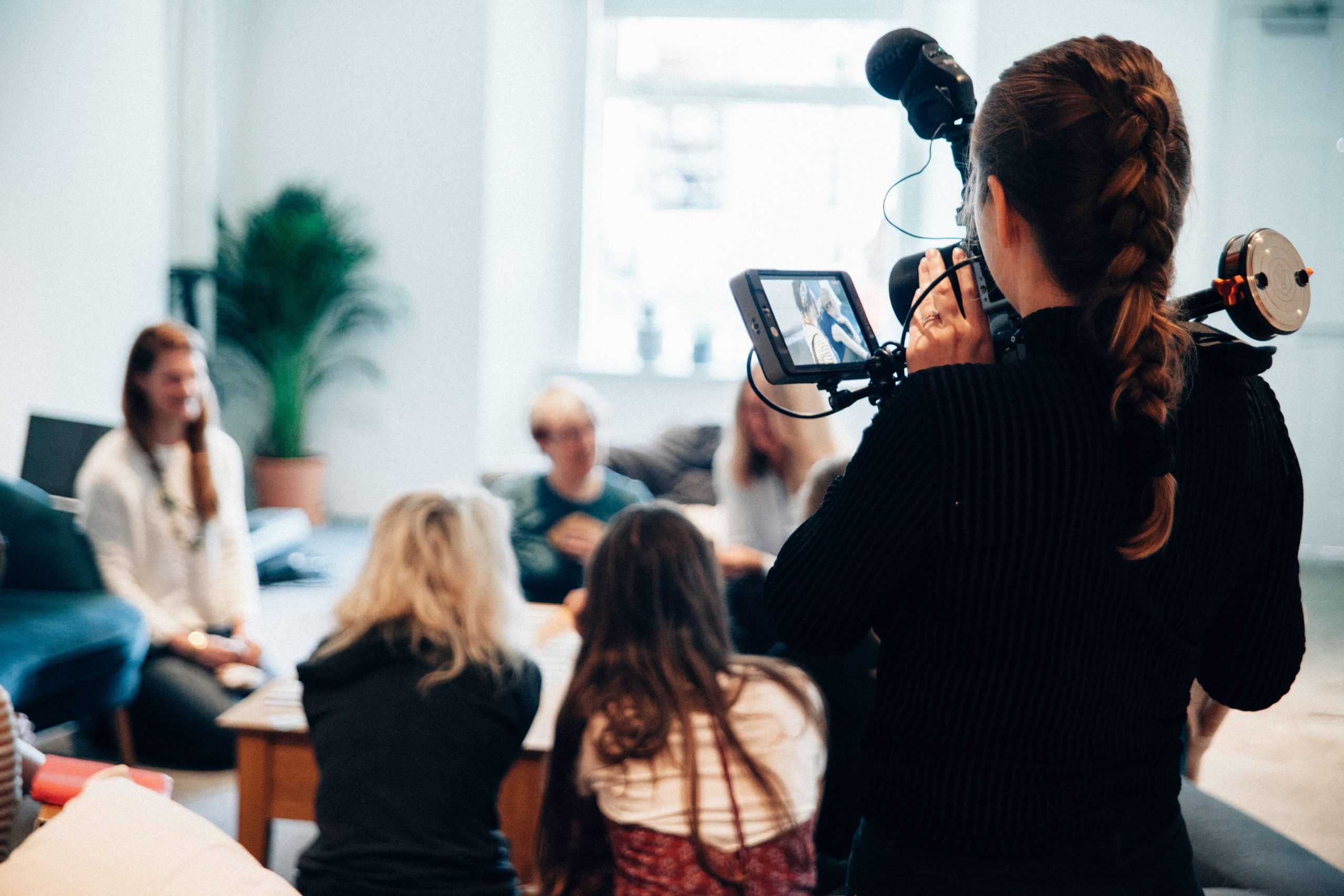
Biotech video production works best when accuracy comes first and persuasion comes second. To make a biotech or science video that wins trust, film real people and real science, keep every claim defensible, and let broadcast-quality craft carry the story rather than dress it up.
Science audiences are sceptical by training. Investors, regulators, clinicians and prospective hires can all spot a shortcut. A film that oversells loses the room faster than one that says less and proves more. What follows is how we think about the work, and how you can brief a team to get it right.
What makes biotech video different
Most marketing video asks a viewer to feel something. Biotech asks a viewer to believe something first, then feel confident acting on it. That shifts the priorities. The tone is measured rather than loud. Claims are specific rather than sweeping. Data appears with context, not dropped in as a graphic for effect.
There is also a duty of care. A life sciences video may touch patient outcomes, clinical stages or safety, so wording has to survive a second read by someone who knows the field. We treat script sign-off as a shared task with your scientific and regulatory leads. It is slower, and it is the reason the finished film holds up. If you want the full picture of how a project moves from brief to delivery, our production process sets out each stage.
How to explain complex science on camera
The goal is not to simplify the science until it is wrong. The goal is to order it so a non-specialist can follow the logic without feeling talked down to. We usually build the story around a single question the viewer already has, then answer it in plain language before adding detail.
A few habits help. Let a scientist speak in their own words, then support them with visuals that carry the technical load, so the viewer sees the mechanism rather than only hearing about it. Use analogy sparingly and only where it stays true to the biology. Keep one idea per sentence. Where a process is invisible to a camera, such as activity at a molecular level, a short piece of animation earns its place. Where the story is human, such as a researcher explaining why the work matters, live footage does more than any graphic could.
Filming in labs and cleanrooms
Access is the part people underestimate. A working laboratory has protocols that exist for good reason, and a crew that treats them casually will not be invited back. We plan around your rules, not ours. That means gowning where required, respecting containment levels, keeping kit clean and cabled safely, and shooting in a way that never interrupts live work.
Discretion matters too. Benches often hold confidential materials, unpublished results or partner work under agreement. We agree in advance what is in frame and what is not, and we are comfortable signing a confidentiality agreement before anyone arrives. Filming in a cleanroom adds another layer, since gowning, particle control and limited crew numbers all shape what is possible. A recce ahead of the shoot removes almost every surprise. Our work at the Cambridge BioMedical Campus shows how careful planning lets a small crew film in a sensitive environment without slowing the science.
Video for investors and fundraising
An investor film has a narrow job. It has to explain the problem, the science behind the solution and the size of the opportunity, without tipping into hype that a due diligence team will later pick apart. The most persuasive versions are calm. They let the founders and the data speak, and they are honest about stage and risk.
Length is a discipline here. A fundraising video that runs long tends to lose the very people it is meant to convince. We aim for a tight cut that a partner can watch in one sitting, with a longer version held back for those who ask. This is deliberate work, and we do not offer rushed clips dressed up as strategy. A well-made biotech video production in Cambridge can shorten conversations that would otherwise take several meetings, because it answers the obvious questions before they are asked.
Building trust with regulators, partners and talent
Trust is not only an investor concern. Regulators respond to precision and to a company that does not overclaim. Partners want to see that you handle their name and their science with care. And talent, which is often the hardest thing for a growing company to win, wants to sense the culture before they apply.
One film rarely serves all three well, which is why we often plan a small family of pieces from a single shoot. A recruitment cut shows the people and the place. A partner-facing cut focuses on capability and standards. A public explainer keeps claims general and compliant. Filming once and editing for several audiences keeps the look consistent and the budget sensible, while giving each group a version that speaks to them directly.
Across all of it, the principle stays the same. Show the real work, respect the science, and let considered craft do the persuading. That is how a biotech or science video earns belief rather than asking for it.
Frequently asked questions
How much does a biotech video cost?
Cost depends on the number of shoot days, whether animation is involved, and how many edits you need for different audiences. Rather than quote a fixed figure, we scope each project against your goals and give a clear, itemised proposal before any work begins.
Can you film inside our lab or cleanroom?
Yes. We film regularly in laboratories and controlled environments, and we plan around your access rules, containment levels and gowning requirements. A recce beforehand lets us agree what is in frame, protect confidential work and shoot without interrupting live research.
Should we use animation or live footage?
Both have a place. Live footage is stronger for people, culture and anything the camera can show directly. Animation earns its place where a process is invisible, such as activity at a molecular or cellular level. Many science films use a measured mix of the two.
How long does a biotech video take to produce?
A typical project runs across several weeks from brief to final delivery, with extra time built in for scientific and regulatory sign-off. We share a schedule at the start so every review stage is planned rather than rushed.
Will our scientific and regulatory teams review the script?
Always. We treat script approval as a shared task with your experts, so every claim is accurate and defensible. It is one of the main reasons our science films hold up under close reading.